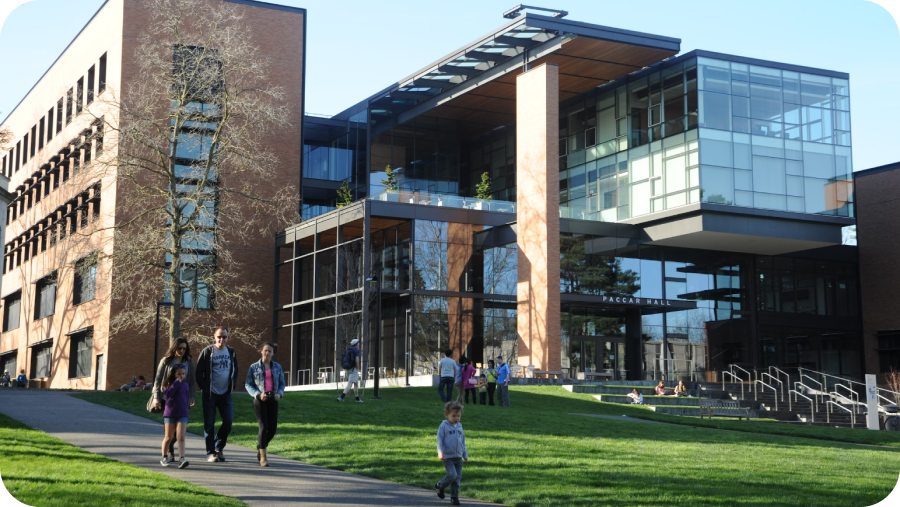
Why is education at a Canadian school or university the best investment in your future?
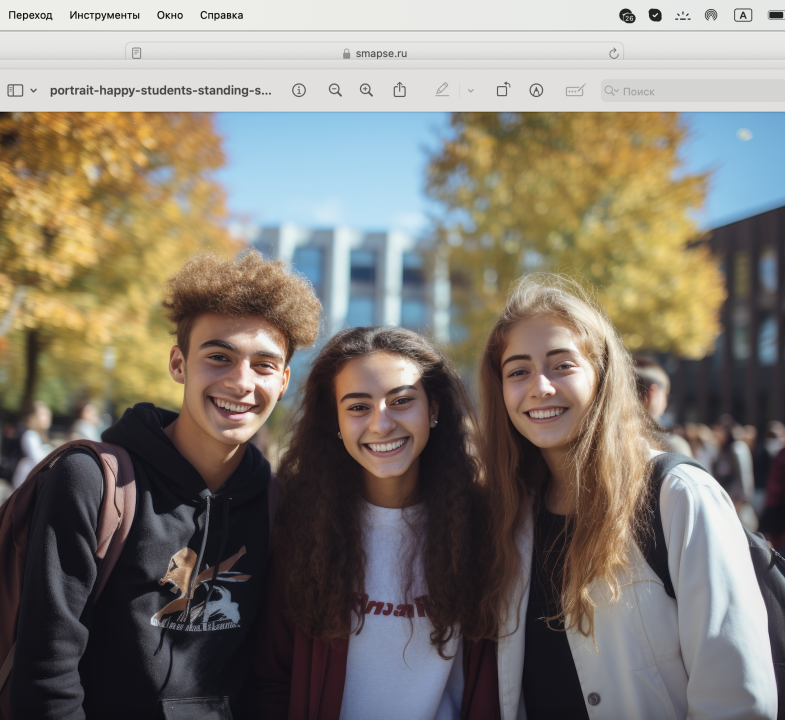






What will studying at a Canadian school or university give you?
Lay the first brick of a better future for yourself or your child today
-
 Immigration opportunities after graduation
-
An internationally recognized diploma
-
A high-quality, well-rounded, practice-oriented education
-
The most relevant fields of our time, which are not taught back home
-
Flexibility of the education system
-
Affordable tuition costs (Canadian dollar)
-
Permission to work part-time during your studies
-
Strong demand in the job market and high salaries
-
A safe and welcoming environment
-
Friends and potential business partners in every country around the world


Submit a request and our expert will contact you


Which programs do we help you enroll in?

Summer camps for
children under 17

School
education 10+

Language
courses 16+

Preparation programs
(Foundation, Pathway, etc.)

Higher education
(bachelor's,
master's)

Strategy and preparation
-
Step-by-step, end-to-end support and guaranteed admission with expert assistance
-
Career guidance for students, help choosing a subject
-
Developing a strategy for admission to a school or university
-
Compiling a portfolio for schools and universities

Exams and admission
-
Classes with teachers, preparation for entrance exams
-
Help writing a motivation letter
-
Organizing visits to educational institutions
-
Help with payments abroad

Accommodation and studies
-
Student mentoring during studies
-
Guardianship services
-
Visa support
Which countries do we help you enroll in?


The United Kingdom, Ireland, the USA, Canada, Australia, China, Singapore, the UAE, South Korea, Turkey, Switzerland and other European countries (Germany, Spain, Italy, France, Cyprus, Hungary, Austria, Portugal, Malta, the Netherlands)






Thousands of students are already studying all over the world — become one of them!
Why do people trust us?

The best agency in Europe and the CIS, recognized by consulates and educational institutions in various countries

Expertise and experience
Global expertise in international education since 2009. Our staff studied abroad themselves and know the whole process from the inside.

Minimal risks
Studying abroad in partnership with us minimizes administrative and financial risks, helping you fulfill your dream of a quality education at school and university!

Proprietary methodology
We developed our proprietary GA (Guaranteed Acceptance) methodology with full step-by-step support for guaranteed enrollment, thanks to which more than 9,000 students have already gone on to study at their dream schools and universities in different countries around the world!
- In the international education field since 2009
- We guarantee admission and transparency
- Personal experience of studying abroad, as well as annual inspections of educational institutions worldwide
- Offices and branches around the world (including Britain, Europe, Turkey, the UAE, Russia, Kazakhstan, Azerbaijan, Kyrgyzstan, the Netherlands, Italy and others)
- Best agency in Europe and the CIS, recognized by consulates and educational institutions in various countries
- Over 4,000 partner educational institutions worldwide
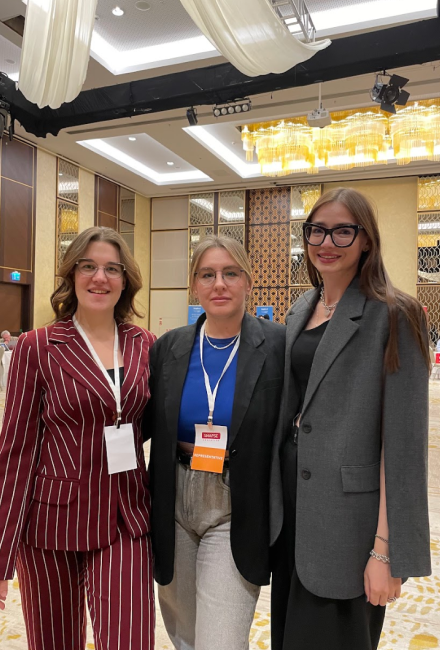
Personally acquainted with admissions officers at hundreds of educational institutions

Every year we hold the largest international education exhibitions in Britain, the UAE, Turkey, Russia, Kazakhstan, Azerbaijan and others
We studied abroad ourselves

Nikolai
-
—
Co-founder of Smapse Education and a number of other projects in the UK, UAE and Turkey
-
—
Graduate of Brunel University and London Business School
-
—
Graduate of Brighton College
-
—
Expert and mentor in secondary and higher education abroad

David
-
—
Completed a master's degree at APU — Asia Pacific University, Malaysia
-
—
Has successfully enrolled students at Imperial College London, King's College London, Berkeley, UCLA and other top universities
-
—
Will help turn your dream of studying abroad into reality!

Daria
-
—
Graduate of the National University of Athens
-
—
Lived abroad for 9 years
-
—
Her students attend the best schools in the USA, Canada, Switzerland and the UK!

Ilya
-
—
Successfully graduated from Salem International University (West Virginia, USA) with full funding
-
—
Specializes in enrolling students at the best universities in the USA, Europe and the UAE
-
—
100% of students were admitted to their chosen universities!
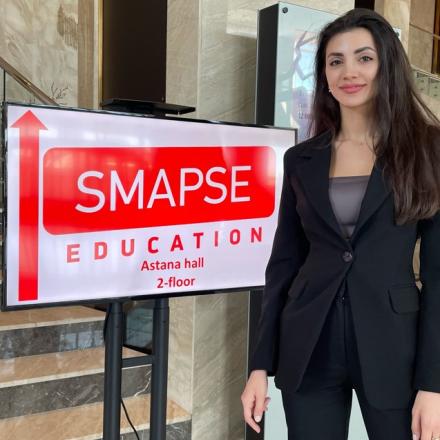
Mari
-
—
Graduate of NEOMA BS in Reims (France)
-
—
Completed an internship in China at the Beijing Administrative University and in Switzerland at the UNCTAD Virtual Institute
-
—
Successfully enrolls students in secondary and higher education in any country in the world, as well as in state universities in France.
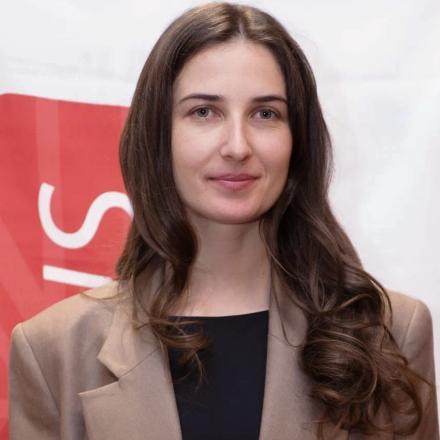
Elena
-
—
Took language courses at Alpadia Berlin, Humboldt Institut Konstanz and Kaplan Oxford
-
—
Helps more than 70 students enroll in the schools and universities of their dreams every year
-
—
Specializes in enrollment at boarding schools worldwide and personally inspects them
-
—
Hundreds of happy families!

Evgeny
-
—
Graduate of the University of California, Santa Barbara (USA)
-
—
Took language courses in Los Angeles
-
—
Participated twice in the Work&Travel USA program in the states of New York and Massachusetts
-
—
Helps more than 50 students enroll in the university of their dreams every year
-
—
Specializes in enrolling students at schools and universities in the USA, England and South Korea
Reviews from our students
We work for results and do everything we can to get you enrolled in the school or university of your dreams!

Alexandra
19 years old

Sergei
23 years old

David
21 years old

Kim Nicole
17 years old

Alina
15 years old
Masha
24 years old

Anastasia
23 years old

Fedor
21 years old

Alexandra
18 years old

Adele
19 years old

My new life began right here in Ireland — I've made so many friends from all over the world, and studying here brings nothing but joy. You can't imagine how different higher education in Ireland is from Russian education.
The teachers are highly knowledgeable and still active in the industry, the information is completely up to date, most assignments focus on practical work with the material, and every subject on the course is relevant to the field — no filler at all. Living and studying abroad is an incredibly unique experience. If you're also thinking about studying abroad, feel free to reach out to Smapse!

Griffith College Dublin (Ireland)

Thank you so much to the Smapse Education team, especially Ildar. He helped me make my dream come true and get into a wonderful university in the heart of London. I recommend this company to everyone, because they guide you through every step, from admission and submitting documents to settling into studying abroad. Thank you so much!

King`s College London University of London

First of all, I'd like to mention the Smapse company that helped me, and specifically one of the staff members — David Atoboev. I want to express my sincere gratitude for all the work he did.
He answered all my questions promptly, quickly met all the requirements set by the admissions officers, put together my entire document package, acted as my representative, and guided me from the very first consultation all the way to my flight to London. As a result, you can see — behind me is my educational institution, and studying here was my dream come true.
I'm so glad I reached out to Smapse specifically, thank you so much!

Birkbeck University of London
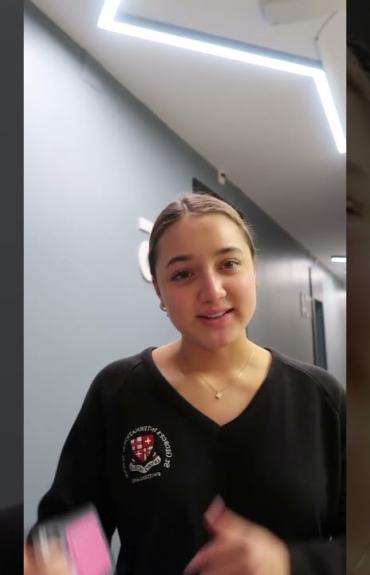
I really appreciated Mari's work — she gave me a lot of support, arranged all the interviews and tests, always answered my questions, and was always in touch.
Right now I'm doing the international IB program. My future plans are to keep working with Mari and go to university with her, since I have one year of school left. We've already applied to two universities: in London and in Milan. I can't wait to hear back from them. Thank you so much for your help!

St. Georges Montreux

I'm now in my 3rd month studying at CATS Academy Boston in the USA. There are so many students here from different countries, and a huge variety of electives and clubs. I got into this school thanks to Smapse — special thanks to Daria Zlatorunskaya and Ksenia, who helped me choose the school and handle all the documents. I don't regret moving to study in the USA at all, and don't be afraid to make tough decisions in your life!

CATS Academy Boston
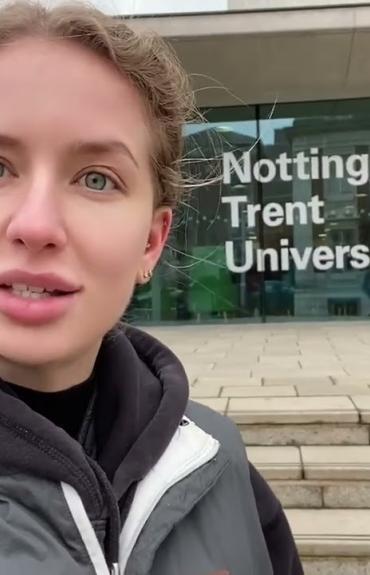
I live and study at Nottingham Trent University. I want to say a big thank you to the Smapse Education team, who helped me make my dream of moving to another city and studying here come true — especially David, who helped me choose a course that would meet all my needs.
I can and want to recommend this team to you, because they'll help you make your dream come true and help you choose a course that fully suits you. They guided me from the very beginning of the selection process all the way to submitting documents — that's genuinely full support, so if you need that, get in touch with them.

Nottingham Trent University (England)

Here in sunny Spain, thanks to Mari's tremendous work as my advisor on everything related to the university. Whatever came up, whatever tension there was, any misunderstandings — Mari resolved it all quickly and efficiently, and there was always a sense of confidence that I would definitely make it.
She even helped with things outside her usual scope of work: finding a place to live, pointers about the visa, about insurance, which also mattered a lot. I loved everything about it. So I'm sending you sunshine and warm rays, I love you all so much, and thank you again, Mari!

IED Madrid

I'm standing right now in front of my university building, EU Business School, which I was only able to get into thanks to Smapse Education. They helped me prepare all the necessary documents, pass all the exams, and get into a university abroad. Before this, it seemed impossible to me. I'd especially like to thank my agent Elina for her brilliant work.

EU Business School Barcelona

I'd like to thank your company for providing all the services that helped us. I really like it here, I enjoy studying here, and with you, studying has become much easier, thanks to all your advice and all your help. Great teachers, a great connection with the teachers — I recommend this school.

Hispania Valencia
Hi everyone, my name is Adele, I'm from Kazakhstan, and right now I'm studying at the Technical University of Vienna, in Austria. I want to thank Smapse for making this idea a reality. In particular, Ekaterina, who helped me with my study documents, and Valeria, with whom we handled my Austrian visa. A beautiful, wonderful city, an interesting course of study, and wonderful friends - all of this makes this part of my life a truly memorable experience. Thank you, Smapse!

Technical University of Vienna






What English level do I need to qualify for education abroad?
It depends on the program you plan to apply to and the degree level, but it's usually no lower than B2.
Do EGE (unified state exam) scores affect admission to a foreign university?
For the most part, no — universities don't require EGE scores, only the school certificate. But if you're interested in the Ivy League or other top-tier institutions, you'll need to show your EGE scores, and in some cases simply the fact that you took the exam.
Why can't you enroll directly into the first year in many countries?
Many applicants find that they can't enroll directly into the first year and need to complete a foundation program first. This is because education systems differ from country to country, so students need to adapt to a new environment. In fact, these foundation programs aren't a lost year, as many people think — they're designed to help students adapt to new teaching approaches, build academic English skills and basic knowledge in subjects related to their future major, and learn how to study — that is, how to communicate with professors, and understand the grading system and how homework is done. In addition, in some countries, such as the USA and Canada, the foundation program is already built into the university's first year.
Can you enroll in a university right after grade 11?
In most cases, students who have completed 11 years of education need to enroll in a foundation program to bridge the gap in education. A foundation program isn't a waste of time — it's designed to help students adapt to a new educational environment and prepare for a smooth transition to a bachelor's program, so that when a student moves on to the first year, they already have basic knowledge of their future major.
What are the most popular tests for admission to institutions in English-speaking countries?
The most popular language tests for admission to institutions in English-speaking countries are TOEFL (Test of English as a Foreign Language) and IELTS (International English Language Testing System). These tests are widely recognized and accepted by most institutions in the USA, the UK, Canada, Australia and other English-speaking countries.
Are there any age restrictions for applicants?
There are no age restrictions for applicants, but age and a gap since the last completed level of education can affect visa officers' decisions when issuing student visas. As a rule, applicants enroll in foundation programs and bachelor's programs at age 18-21, and in master's programs at age 23-25.
Can international students work part-time while studying at universities abroad?
Part-time work opportunities during studies vary from country to country, but as a standard, students can typically work up to 20 hours a week. In the 2nd and 3rd years, programs become more specialized, students already have a practical understanding of their major, and the university offers various paid internships.
Are there courses abroad to prepare for language tests?
Yes, there are many courses and programs abroad for language test preparation. Many educational centers and language schools offer intensive courses to prepare for TOEFL, IELTS, SAT and ACT. Such courses usually include training in core skills, practice with test tasks, and support from experienced teachers, which helps students improve their scores on language tests.
At what age is it best to send a child to school abroad?
The optimal age to start studying at a school abroad is 13-15. By this age, children already have independence skills, can look after their day-to-day needs on their own, and have developed social and integration skills. Starting at this age gives the child enough time to adapt to the new teaching system and ensures a smooth transition to senior school programs.
At what age do boarding schools abroad accept children?
Boarding schools abroad usually accept children from age 6, which corresponds to the start of primary school, including 1st grade. But age criteria can vary greatly depending on the specific school and country. Some schools accept children from as young as 3-4, such as in Switzerland; the UK accepts children from age 6-7; and some accept them only from age 12-13, such as Austria, the USA, Canada, Spain, the UAE, and so on.
What language is used for teaching at boarding schools in Europe?
Teaching at boarding schools in Europe can take place in different languages, depending on the specific school, its location and its curriculum. However, at most international boarding schools in Europe, the main language of instruction is English. English is often used both to teach academic subjects and for everyday communication within the school.
Can you enroll in a school if your English level is below the required standard?
Yes, you can. Private international schools have many years of experience working with international students and are ready to offer them academic support. Help is available both in explaining topics and subjects and in additional English classes, to integrate the student into the new learning environment quickly and smoothly. There are also special preparatory schools that offer specialized adaptation programs and prepare students for admission to top-ranked schools within a short timeframe.
What entrance exams are required, and is IELTS necessary?
Most schools don't require the IELTS exam, since schools run their own internal English language tests. In addition, there are tests in mathematics, as well as a non-verbal reasoning test aimed at identifying the specifics of the student's approach to the learning process. An interview with the admissions officers is also a mandatory part of the entrance assessments. During the interview, the student and the school get to know each other: the school learns about the student's plans and goals for their education and their interests, and the child has the opportunity to ask the school any questions they're interested in.
How will the child live at school without their parents?
Because international schools abroad have many years of experience working with international students, the entire course of study — and especially the first few months — is focused on helping the child adapt to the new learning and living environment, and on making the child feel at home away from home. Each student is assigned a personal tutor who helps with everyday matters and ensures smooth integration into the new environment. Team-building games and activities are held during the first days after arrival. In addition, the child stays in touch and can call their parents at home regularly.
Will you help with transferring money abroad to pay for tuition?
Yes, of course. In addition to the UK and Russia, our company is also represented in many countries abroad, which ensures reliable money transfers anywhere in the world.
Do you help with visas?
Yes, of course. We have a visa department.
When should I start preparing for admission?
We always recommend starting to prepare and submit your documents in advance, at least a year ahead. Important! Each institution has its own application deadlines, which need to be taken into account! At the same time, many schools and universities accept applications for as long as places remain available on the program, so we'll be happy to help you with admission on a tighter timeline as well.
How can you help me?
Drawing on many years of experience in international education, as well as our own personal experience studying abroad, our team has developed a proprietary GA (Guaranteed Acceptance) methodology, thanks to which more than 9,000 students have already received the education of their dreams in countries around the world. We'll help you too! Together with each student, we go through a long journey — starting with identifying the student's strengths and needs to select the right programs, countries and institutions, developing an admission strategy, gathering the necessary documents, preparing translations, communicating with institutions, and preparing the student for entrance tests and interviews to secure the coveted offers from institutions — and then moving on to visa processing and preparation for the long-awaited journey into a world of opportunity!
Do you prepare students for entrance tests/exams?
Yes, we have a large pool of vetted teachers who successfully prepare our students for admission abroad.
Can I come to your office for a one-on-one consultation?
Of course! We offer both in-person consultations at our offices by appointment, and online consultations via Zoom, Skype or phone call.




 England
 USA
USA
 Canada